Ubud is where many visitors fall in love with Bali. Set in the green foothills of the island’s centre, it has been a home for artists, dancers and craftspeople for generations. Mornings begin with the scent of incense from fresh offerings on every doorstep, afternoons drift by in cafés overlooking rice fields, and evenings come alive with the clang of gamelan orchestras accompanying traditional dance. Beyond the busy main streets, paths lead through emerald terraces, deep river valleys and village temples.
This guide gathers the best things to do in Ubud and the surrounding area, from the famous sights to quieter corners, with practical tips on timing and getting around.
In Ubud Town
Ubud Palace and the art market
Puri Saren Agung, the royal palace, sits at the heart of town. Its courtyards with carved stone gates and pavilions are free to visit during the day, and in the evening they become the stage for traditional dance performances such as Legong and Barong. Opposite the palace, the Ubud art market sells sarongs, baskets, carvings and paintings. Bargaining is expected, so start well below the first price and keep it friendly.
Sacred Monkey Forest Sanctuary
At the southern end of Monkey Forest Road, this forest sanctuary is home to hundreds of long-tailed macaques and three temples hidden among giant banyan trees and mossy statues. It is beautiful and atmospheric, but the monkeys are bold. Remove sunglasses and hats, keep bags closed, do not carry food and never touch the monkeys. Our Ubud Monkey Forest and Palace Walking Guide combines the forest with the palace and the town’s history.
Campuhan Ridge Walk
This easy paved path starts near the Gunung Lebah temple at the confluence of two rivers and follows a grassy ridge between two valleys. Go early, before 8 am, to enjoy the cool air and soft light, then continue to the village of Bangkiang Sidem and stop for breakfast in a café with valley views.
Rice Terraces and Countryside
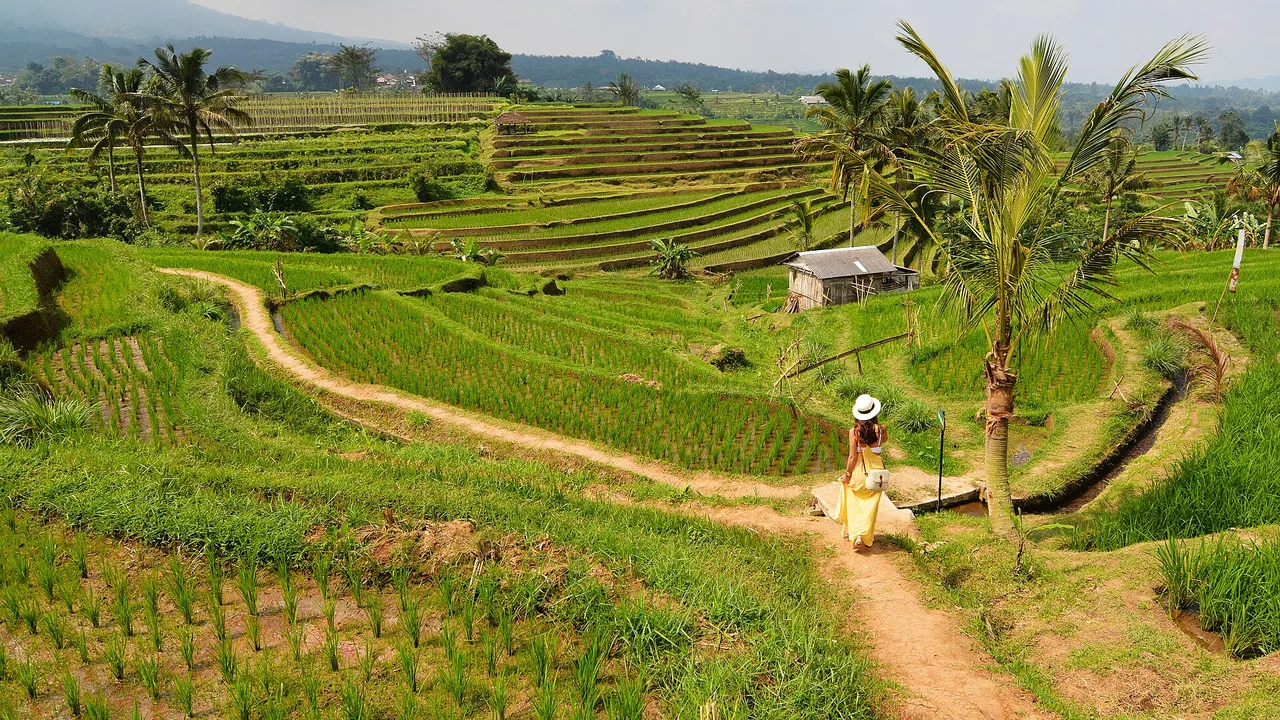
The rice terraces around Ubud are part of the subak system, Bali’s traditional cooperative irrigation, recognised by UNESCO as a cultural landscape. Water flows from temples and springs through canals and terraces shared by farming communities.
The most famous terraces, 20 to 30 minutes north of Ubud. Beautiful but busy, with swings and cafés. Arrive at sunrise for calm.
A footpath from the centre of Ubud leads through rice fields to organic farms and warungs, a quiet escape within walking distance.
Vast terraces in the west of the island, about 1.5 hours away, part of Bali’s UNESCO-listed cultural landscape.
Temples Around Ubud
Within a short drive of Ubud are some of Bali’s most important temples. Tirta Empul, the holy spring temple near Tampaksiring, is where Balinese Hindus come to purify themselves in the bathing pools. Visitors may join the ritual respectfully, wearing a sarong provided at the entrance. Goa Gajah, the Elephant Cave, has an ancient carved cave entrance and bathing pools from around the 11th century. Gunung Kawi, a short walk down hundreds of steps to a river valley, has rock-cut memorial shrines carved into cliff faces.
Our Tegallalang, Tirta Empul and Goa Gajah Tour combines the highlights with a driver and guide, so you can enjoy the stories behind each site.
- Book an Ubud full-day driver and set your own pace.
- Learn about local crafts with the Ubud Art and Craft Villages Guide.
- Cool off at a waterfall on the Tegenungan Waterfall and Coffee Plantation Tour.
Culture and Workshops
Ubud is the best place in Bali to learn about traditional arts. Watch a dance performance at the palace or a village temple in the evening; tickets are sold on the street and at the venues. Join a Balinese cooking class with a market visit to learn how to make spice pastes, satay and sweet treats. Batik, silver jewellery, wood carving and offering-making workshops are available in the surrounding villages, many run by families who have practised their craft for generations.
Museums such as the Agung Rai Museum of Art and the Neka Art Museum show Balinese painting from classical styles to modern works. The villages of Mas, Celuk and Batuan, on the road south, specialise in wood carving, silver and painting respectively.
Adventure and Nature
The Ayung River flows through a deep gorge west of Ubud and offers some of the most popular white-water rafting in Bali, suitable for beginners. Our Ayung River Rafting from Ubud includes pickup and lunch. For early risers, the Mount Batur Sunrise Trek from Ubud leaves around 2 am and reaches the summit of an active volcano for dawn, about two hours of climbing.
Waterfalls such as Tegenungan, Tibumana and Kanto Lampo are within 30 to 45 minutes of Ubud. Cycling tours start in the highlands of Kintamani and roll downhill through villages and rice fields back towards Ubud.
Wellness
Ubud is famous for yoga studios, meditation retreats and spas. A traditional Balinese massage uses long strokes, acupressure and aromatic oils. Try the Balinese Massage and Flower Bath in Ubud, or relax in your accommodation with an in-villa massage. Prices range from very affordable local spas to luxury resort treatments.
Day Trips From Ubud
- East Bali: the Sidemen valley, Tirta Gangga water palace and Lempuyang temple, a long but beautiful day. See the Sidemen and East Bali Countryside Tour.
- North Bali: the lake temple of Ulun Danu Beratan, Munduk’s waterfalls and the black-sand beaches of Lovina.
- Kintamani: views over Mount Batur and its crater lake, with hot springs at Toya Bungkah.
- South coast: Uluwatu temple for sunset and the Kecak fire dance.
Costs in Ubud
| Activity | Typical price |
|---|---|
| Temple entrance (Tirta Empul, Goa Gajah) | USD 3–6 per person |
| Evening dance performance | USD 6–10 per person |
| Cooking class with market visit | USD 30–50 per person |
| Balinese massage, 60 minutes | USD 10–40 |
| Full-day private driver | USD 45–70 per car |
Tips for Enjoying Ubud
- Start sightseeing early; tour buses arrive at Tegallalang and the temples by 9 am
- Bring a sarong and sash for temples, or rent one at the entrance
- Walk in town but use a driver for sights outside, as traffic is heavy and parking scarce
- Respect ceremonies; processions have priority on the roads
- Stay a few kilometres outside the centre for rice-field views and quiet nights
Ubud After Dark and Where to Eat
Ubud goes to bed earlier than the beach resorts, but its evenings are among the most memorable in Bali. Around 7.30 pm, gamelan music drifts from the palace and temple courtyards, where dancers perform Legong, Barong, Kecak and other dances in elaborate costumes. Each night a different troupe and story is staged, so check the schedule posted outside the palace. Arrive a little early to choose a good seat.
Food in Ubud ranges from humble warungs serving nasi campur and babi guling, Bali’s famous suckling pig, to some of the island’s most creative restaurants. Bebek betutu, duck slow-cooked in spices and banana leaves, is a local speciality worth trying. Vegetarians and vegans are exceptionally well served, with countless plant-based cafés. For a fine-dining evening, several restaurants in the hills around Sayan and Kedewatan offer tasting menus with views over the Ayung valley.
Common Mistakes to Avoid
- Trying to see everything in one day: distances are short but traffic is slow. Choose one area per day.
- Arriving at Tegallalang at midday: it is hot, crowded and the light is flat. Go at sunrise or late afternoon.
- Scooter riding without experience: narrow, steep roads and heavy traffic make Ubud a poor place to learn.
- Ignoring ceremonies: temple festivals can close roads. Ask your driver about the local calendar.
- Feeding the monkeys: it makes them aggressive and is not allowed in the sanctuary.
Where to Stay
Central Ubud is convenient for restaurants and walking, but can be noisy and congested. Villages such as Penestanan, Sayan and Kedewatan offer valley views and peace, while Tegallalang and Payangan to the north are greener and cooler. Many visitors spend three to five nights in Ubud as part of a longer Bali trip. Getting there from the airport takes about 1.5 to 2 hours; our Ngurah Rai Airport to Ubud Transfer gets you there without stress.
Frequently Asked Questions
How many days do I need in Ubud?
Three to four days is ideal to see the main sights, take a class or two and enjoy the countryside without rushing.
Is Ubud walkable?
The centre is walkable, though pavements are narrow and uneven. For temples, terraces and waterfalls outside town, a driver is best.
What is the best time to visit Tegallalang?
Early morning, ideally around sunrise, before the crowds and the midday heat.
Can I swim at Tirta Empul?
Visitors may take part in the purification ritual respectfully, wearing a sarong. Follow the order of the fountains and local guidance.
Is the Monkey Forest safe?
Generally yes, if you follow the rules: no food, no loose items and no touching the monkeys. Seek medical advice after any bite or scratch.
Get Your Free Custom Indonesia Tour Quote Today!
Drivers, guides and cultural experiences in Ubud and across Bali, arranged by our local team at fair prices.
Browse Multi-Day Tours Explore Short Excursions