Many people now come to Sumba for the empty beaches, the horses and a handful of well-known resorts. What they remember, if they leave the coast for a day, is often something else: a village of tall peaked houses, a stone tomb in the square, a piece of ikat still on the loom, or, in season, the charged atmosphere of Pasola. This is not a culture staged only for cameras. It is a living set of clan obligations, funeral rites and harvest ceremonies, and it deserves a slower, more careful kind of visit than a quick photo stop.
This page is about that cultural layer. For a full island overview, including how to get there and where the beaches are, use our Sumba travel guide. What follows is how to understand Pasola, how to visit villages well, and how to travel with a guide who can explain what you are looking at.
Marapu, Villages and What You Are Seeing
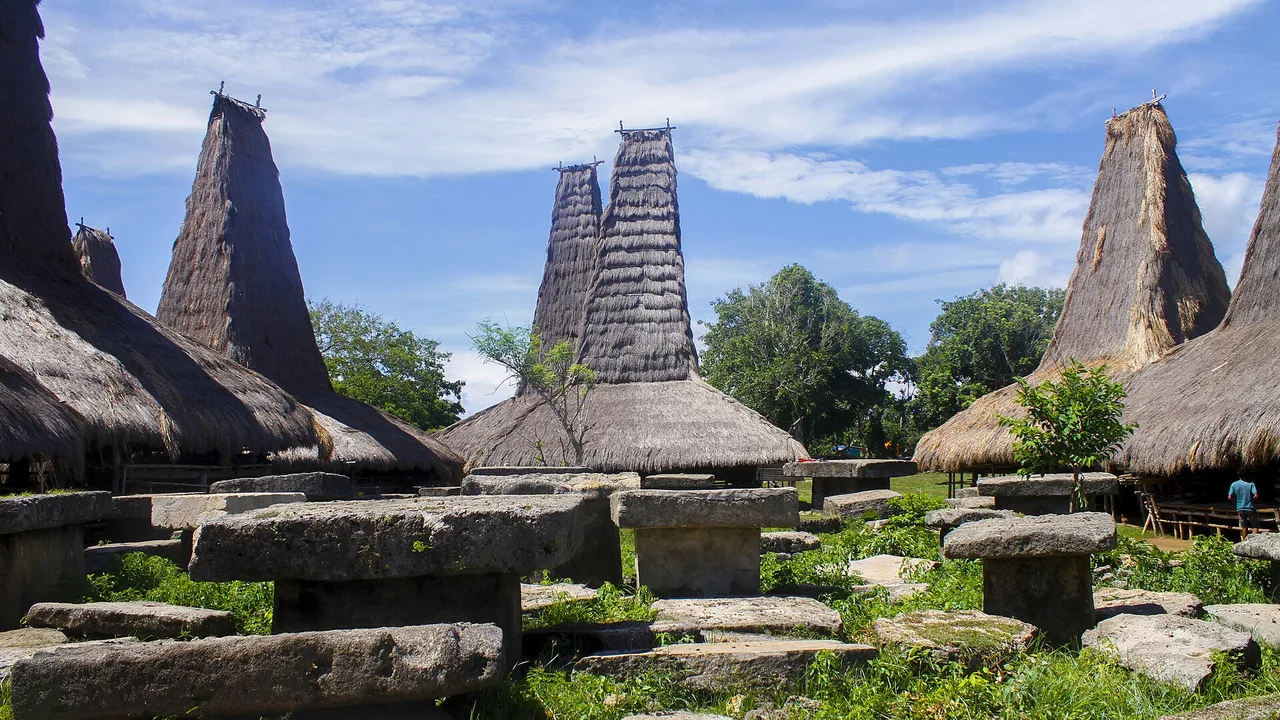
Much of traditional Sumbanese life is organised around clans, ancestral houses and marapu, the indigenous belief system that honours ancestors and the spirits of place. Churches and mosques are part of the island too, and the two layers often sit side by side. In older villages you will see high, steep thatched roofs, raised wooden houses, and megalithic graves in or beside the communal space. These are not ruins. Families still live here, still bury their dead with ceremony, and still maintain the house as a social and ritual centre.
West Sumba, around Waikabubak and the Kodi coast, is especially rich in traditional architecture. Villages such as those on the route covered by a Kodi and Ratenggaro private driver are among the most striking, with houses facing the sea and tombs in the foreground. East Sumba, toward Waingapu, has its own village patterns and is known for fine ikat. A Waingapu and East Sumba driver or the East Sumba hills, weaving and Walakiri tour is a better east-coast day than a rushed loop that tries to see the whole island.
A ritual spear contest on horseback, tied to the agricultural year, held in parts of West Sumba in February or March.
Peaked clan houses and megalithic graves, still used and maintained, especially in the west and in older settlements.
Hand-dyed textile work, with East Sumba particularly known for strong patterns and a long making process.
Pasola: When It Happens and How to Watch
Pasola is the ceremony most visitors have heard of: two groups of riders throw wooden spears at one another in a ritual contest linked to the rice cycle and to the appearance of a sea worm along the coast. It takes place in the first months of the year, usually February or March, in specific districts of West Sumba, and the exact days are not set years in advance in the way a city festival is. Dates depend on local ritual calculations and can move. If Pasola is the reason for your trip, you need local advice close to the time, flexibility in your flights, and a Pasola festival private guide who knows where to stand, when to arrive, and how not to get in the way.
It is a serious event, not a show put on at a hotel. The atmosphere can be intense, the riding is fast, and injuries happen. Dress modestly, keep a respectful distance, follow your guide, and do not walk into the field for a photograph. Accommodation in West Sumba fills around the main days, and roads can be busy. If you cannot be on the island in that narrow window, do not invent a disappointment: villages, weaving and the landscape are available all year, and a funeral or other ceremony, if you are invited and properly accompanied, can be as memorable as the more famous contest.
Weaving, Guides and a Respectful Visit
Ikat from Sumba is among the most distinctive textiles in Indonesia. The work is slow, the patterns carry meaning, and a good piece is not a cheap beach-stall souvenir. A Sumba ikat weaving workshop is a better way to understand the process than buying the first cloth you are offered at a viewpoint. If you do buy, buy from the maker or a recommended cooperative, and pay a price that reflects the labour. East Sumba is the usual focus for this, though weaving exists in other parts of the island as well.
A local guide changes the quality of a village day. Someone who can explain the house, the tomb and the etiquette, and who can greet people properly, is worth more than a slightly cheaper self-drive. Use a Sumba culture and marapu private guide for a dedicated cultural day, and agree in advance whether you are visiting a village that welcomes guests. Ask before photographing people, especially during ritual. Dress modestly, bring a small contribution if your guide suggests it, and do not treat a funeral as a tourist attraction. If a ceremony is underway and you are not invited, you can leave.
- Book a culture and marapu guide or a Pasola guide in season.
- Add a weaving workshop or an East Sumba weaving day.
- For a wider stay, look at the Sumba island tour.
When to Go and How Many Days
For Pasola, you are looking at February or March, with flexible dates and a base in West Sumba. For villages, weaving and the coast, the dry season, roughly April to October, is the easier time to travel the roads. The island is large and the surfaces are uneven; a short visit that tries to see east and west in two days will be a blur of driving. Four or five nights is a sensible cultural-plus-beach stay. A week is better if you want both coasts and some unscheduled time. Our travel guide sets out the wider logistics; this page is the reminder not to fill every day with beaches only.
Combine a cultural day with rest. A funeral or a long village visit can be emotionally dense as well as visually striking. A swim later, or a quiet evening, is not a wasted afternoon. Horse riding on the beach, if you want it, sits naturally at the end of a west-coast day; see the Sumba horse riding option, and keep it separate from a ceremonial context.
Where to Stay
For Pasola and many of the western villages, stay in or within reach of Waikabubak or the southwest coast, with a driver who can start early. For weaving and the east, Waingapu or a nearby lodge is more practical. Some travellers split the island with a night in each, using a Waingapu to Tambolaka transfer or a Tambolaka to Waikabubak transfer. Beach resorts on the southwest, including places such as Nihi Sumba and Cap Karoso, can be combined with cultural days if you accept the driving time and book a guide rather than hoping the front desk can invent one at breakfast.
Airport arrivals are usually at Tambolaka in the west or Waingapu in the east. A Tambolaka airport to Waikabubak transfer or a transfer to the southwest coast should be booked before you fly; the island is not a place to invent a late-night taxi plan. For a first visit, a Tambolaka and Waikabubak driver plus a cultural guide is a strong, simple combination.
Typical Costs
A cultural day with a car and a specialist guide costs more than a simple beach transfer, and it should: you are paying for knowledge and for a proper introduction. A full-day driver on Sumba commonly falls around USD 60 to 120 depending on distance and the vehicle, with a guide on top for a village or Pasola day. Weaving workshops vary by length and by whether a cloth is included. Pasola-season rooms can rise sharply and should be booked early. The Sumba island tour is often the cleaner way to see the costs in one place.
| Item | Typical range |
|---|---|
| Full-day driver, per car | Often about USD 60 to 120, depending on distance |
| Specialist cultural or Pasola guide, per day | Varies; budget for a proper local guide, not a last-minute add-on |
| Ikat workshop, per person | Often a few tens of dollars, more if a piece is included |
Practical Tips and Common Mistakes
Do not walk into a house or a ceremony uninvited. Do not photograph people, graves or rituals without asking. Do not bargain aggressively over a textile that took months to make. Dress modestly in villages, and wear shoes you can walk in on uneven stone. Keep cash for small contributions and for rural stalls. If Pasola dates shift, stay flexible rather than forcing a different district’s event that your guide did not recommend. For a first approach to the island as a whole, start with the travel guide and then use this page to shape the cultural days.
Frequently Asked Questions
When is Pasola?
Usually in February or March, in parts of West Sumba, with exact days confirmed close to the time. If you are travelling for it, keep your plans flexible and work with a local guide.
Can I visit traditional villages without a guide?
You can reach some villages by car, but a local guide makes the visit better and more respectful. You will understand more, and you are less likely to walk into a space where you should not be.
Is it acceptable to watch Pasola as a visitor?
Yes, if you stay where you are asked to stay, dress modestly, and treat it as a ceremony rather than as a show. Do not enter the field, and follow your guide’s instructions.
How many days should I allow for culture as well as the coast?
Set aside at least one or two full cultural days in a four- or five-night stay, more if you want both west and east. The driving distances are real.
Where should I stay for village visits?
West Sumba, around Waikabubak or the southwest, is best for many of the famous traditional villages and for Pasola. Stay in or near Waingapu if weaving and the east are your focus.
Can I buy ikat on the island?
Yes, and it is better to buy from the weaver or a recommended workshop than from a random roadside stall. Take your time, ask about the piece, and pay fairly.
Get Your Free Custom Indonesia Tour Quote Today!
From a Pasola-season stay to a quieter week of villages and weaving, our local team can match you with the right guide and a pace that leaves time to look properly.
Browse Multi-Day Tours Explore Short Excursions