The Komodo dragon is the largest living lizard, and it is found in the wild only in this small part of eastern Indonesia. Visitors usually see it on a guided walk on Komodo or Rinca, after a boat ride from Labuan Bajo on Flores. The encounter is often quieter than the documentaries suggest: a large animal resting in the shade, moving through dry forest, or crossing a path while a ranger keeps the group together. That is still a remarkable thing to see. It is also a wild animal with a serious bite, and the park is set up around that fact. You walk where you are told, you stay with the ranger, and you do not treat the visit as a photo shoot in which the dragon is a prop.
This guide explains how a dragon visit works, which islands are typically used, and how to behave. The wider park, including boats, Padar and snorkelling, is covered in our Komodo National Park guide. Practical starting points from town include the Komodo and Padar day trip, the Rinca, Kelor and Pink Beach day trip, and a park private guide. A longer option is the Komodo and Flores Tour.
Where Komodo Dragons Live
The name island, with ranger-led walks from the park office, a chance of seeing dragons, and a full day when combined with other park stops.
A shorter boat ride from Labuan Bajo for many itineraries, with well-used walking trails and frequent sightings around the ranger area.
The gateway town on Flores, with the airport, hotels and the harbour for day boats and overnight trips into the park.
Dragons also exist in smaller numbers on some other islands in the park and in limited areas of western Flores, but almost all visitor encounters happen on Komodo or Rinca on an official walk. You cannot wander into the forest alone to look for them, and you should not try. Sightings are common on standard routes, especially around the ranger stations, but they are not a paid guarantee of a close or dramatic scene. Some mornings you will see several animals; some mornings you will see tracks, a distant shape, and a lot of dry hills.
How a Visit Works
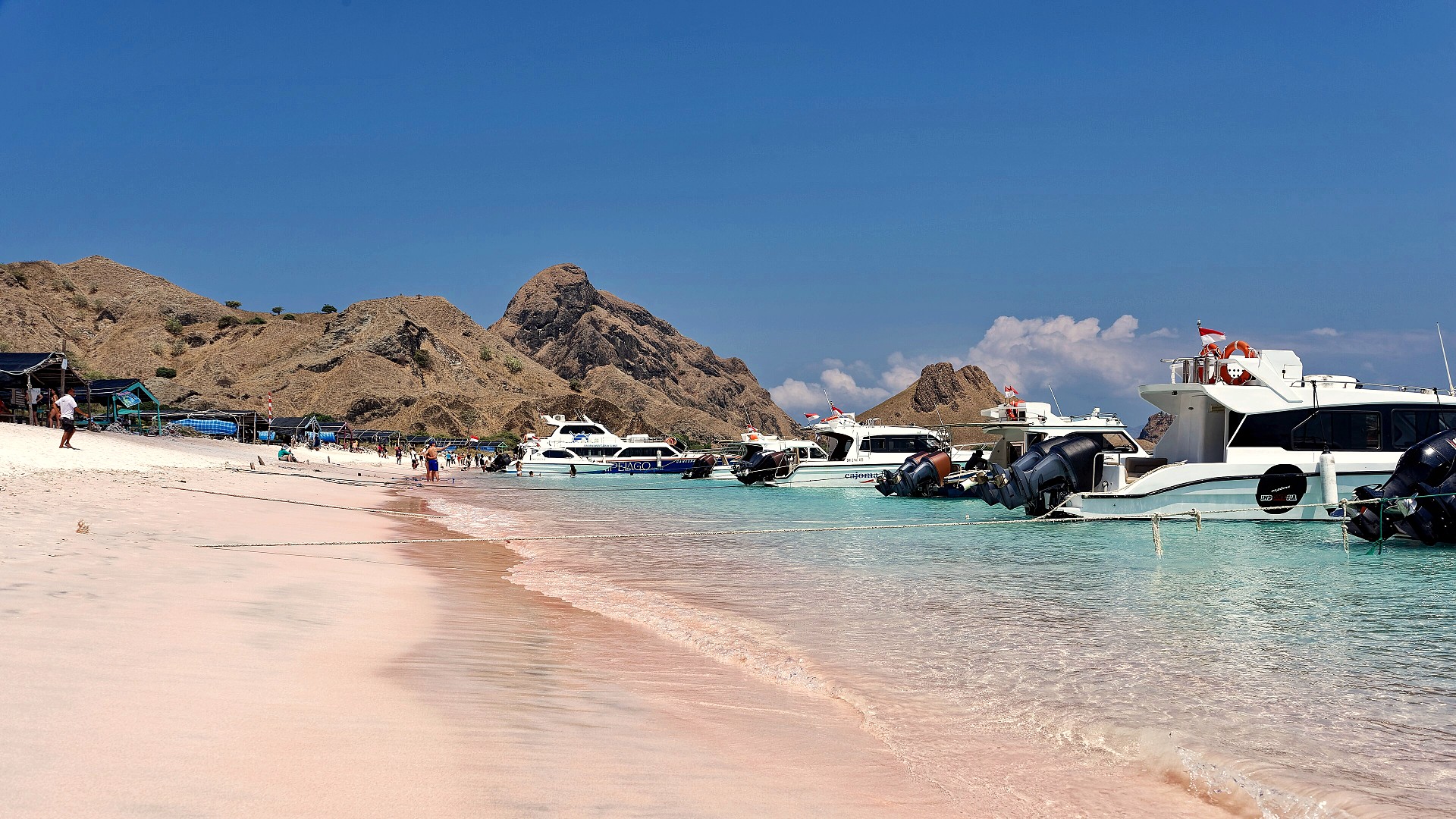
Boats leave Labuan Bajo in the morning, cross toward the chosen island, and land near a park office. There you pay or present tickets, are assigned or meet a ranger, and walk a trail for a period that is often around one to two hours, depending on the route and the heat. The ranger carries a forked stick, sets the pace, and tells the group when to stop. After the walk, most day trips continue to a viewpoint such as Padar, a snorkel stop or a beach, then return in the afternoon. A two-day sailing trip gives you a quieter morning in the park and less of a rush back to the harbour. Airport logistics are simple if you book a hotel transfer and do not try to land, board a boat and see a dragon on the same tight morning.
Park fees and rules change, sometimes by a large amount, and they can be a significant part of the day’s cost. Confirm current rates, what your tour has already included, and whether your ticket is for a same-day visit. The park is a conservation area, not a zoo, and closing times, trail openings and temporary restrictions should be taken as they come, including when a nest site or a particular path is off limits.
Safety and How to Behave
Komodo dragons can be dangerous to people. They have a powerful bite, they can move quickly over a short distance, and they are not domesticated by being used to tour groups. The practical rules are simple and are not optional. Stay with the ranger and the group. Do not walk off the path, do not crouch or sit on the ground to get a lower photograph, and do not let children run ahead. Keep a clear distance, even if an animal looks sleepy. Do not take food onto the trail, and do not try to feed or lure a dragon. If you have a day bag, keep it closed. Follow any instruction to back away or to wait.
These rules also protect the animals. Flash, drones and crowding an animal for a photograph are a poor way to visit a park that exists to keep this species in the wild. If you want underwater time as well, keep it on a separate stop with a proper brief, such as a manta and Taka Makassar snorkel, and do not rush the walk in order to squeeze in one more site. Heat is another factor. The trails are often open and dry; take water, a hat, and shoes you can walk in, not smooth sandals.
- Choose the Komodo and Padar day trip or the Rinca, Kelor and Pink Beach day trip.
- Stay longer on a two-day sailing trip.
- For a wider plan, see the Komodo and Flores Tour.
When to Go and How Long to Stay
Dragons can be seen throughout the year, and a visit should not be reduced to a single “best month.” The drier months, roughly April or May to October, often mean easier boat days and more open, leafless hills, which can make walking and spotting simpler, at the cost of heat and more visitors. Wetter months can mean greener hills, a different sea state, and occasional schedule changes. Either season works if your boat plan is flexible. For a broader calendar, see the best time to visit Indonesia.
One full day in the park is enough to walk with a ranger and see another island or a snorkel site. Two days is better. Labuan Bajo itself is a useful base for a night or two before or after, with hotels such as Meruorah Komodo or Ayana Komodo, depending on the style of the trip. Combine the dragons with Flores overland only if you have extra nights; do not turn the walk into a rushed stop between an early flight and a late hotel in another town.
Typical Costs
| Item | Typical cost |
|---|---|
| Day trip from Labuan Bajo, per person, often with lunch and snorkel stops | About USD 50 to 150, depending on boat and group size |
| Two-day sailing trip, per person | Often about USD 150 to 350, with a wide range by boat |
| Park and conservation fees, per person | A significant extra in some periods; confirm current official rates and what a tour includes |
| Private guide in the park, in addition to the ranger system, if arranged | About USD 30 to 80, depending on the booking |
| Airport to hotel transfer, per car | About USD 10 to 25 |
Always ask whether park tickets, ranger fees, lunch and snorkel gear are in the quoted price. The ticket line is the one that has changed most in recent years, and it should be checked close to your travel dates rather than copied from an old blog post.
Practical Tips and Common Mistakes
- Stay with the ranger at all times, including when you want a photograph
- Do not crouch, sit on the path, or let children run ahead
- Carry no food on the walk, and keep bags closed
- Wear closed shoes, a hat and sun protection, and take water
- Confirm park fees and inclusions before you pay for a boat
- Do not plan the visit as a tight add-on to the same morning as an incoming flight
- Treat a sighting as a privilege, not as a performance the animal owes you
The most common mistake is rushing. A late boat, a short walk and a hurried photograph at the first animal you see is a poor way to visit one of the more unusual parks in Indonesia. The second is ignoring the ranger because the dragon looks slow. The third is assuming that yesterday’s ticket price is still correct. Give the park a full day, listen, keep your distance, and leave the rest of the itinerary loose enough that a weather delay does not unravel the trip. If you also want the underwater side of the same islands, read diving in Indonesia and choose sites that fit your experience rather than adding a difficult current dive after a hot walk.
Frequently Asked Questions
Where is the best place to see Komodo dragons?
On a ranger-led walk on Komodo or Rinca. Rinca is often a shorter boat ride from Labuan Bajo; Komodo is the name island. Sightings are common but never guaranteed in a particular form.
Are Komodo dragons dangerous?
Yes, they can be. That is why you walk with a ranger, keep your distance, and follow the park rules. Do not treat a resting animal as harmless.
Can I visit without a guide?
No. Visitor walks are done with park rangers. Independent wandering on the islands is not how the system works, and it is unsafe.
How long do I need in Labuan Bajo?
Two nights is a comfortable minimum for a day in the park and the flights around it. Three or four nights are better if you also want a sailing trip or time on Flores.
When is the best time to go?
Dragons can be seen year-round. The drier months are popular for boat days and clearer walking, and they are also busier and hotter. Flexibility matters more than a single ideal week.
Get Your Free Custom Indonesia Tour Quote Today!
Ranger walks, park boats and Labuan Bajo transfers, arranged by our local team.
Browse Multi-Day Tours Explore Short Excursions